
A surprising practice you can put to use - TODAY!
The following practice seemed to strike a chord with many readers of my book LIVE AGAIN! In fact, many readers already had a version of their own. That’s why I want to share it with you today.
(You’ll find Practice 3 in my book LIVE AGAIN! The practice is called TURN THE TABLES ON YOUR DEMONS. For short, I call it GOOD HIT! )
One night about eight months after my 2021 Valentine’s Day Miracle, I woke up from an intense nightmare. It was 3 a.m. My heart was racing, my head was spinning, and my T-shirt was drenched in sweat.
My therapist and friends had suggested things to do during such episodes. Walk. Breathe. Read. Pray. But as valuable and rational as these suggestions seemed, I found it difficult to execute any of them. Surprisingly, that’s when a long-forgotten experience came to mind.
I was a linebacker in college. As the memory played out, the opposing quarterback handed the ball to the running back, who charged straight at me. I executed a textbook tackle that put him flat on his back. Making that kind of tackle always results in a rush of adrenaline and a surge of dopamine. It makes the angels sing. For a moment in time, I felt like a superhero.
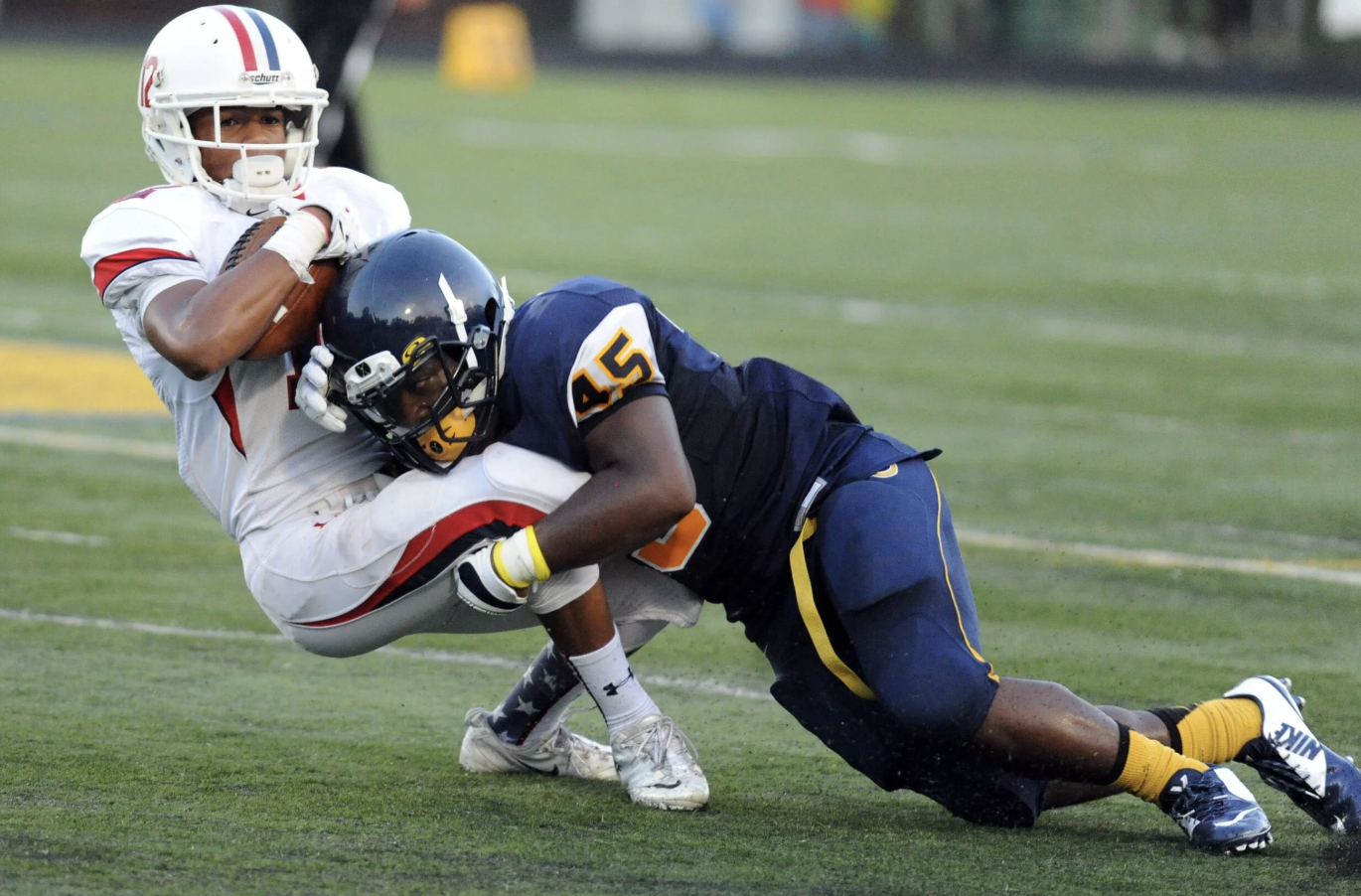
Let’s pause here, because I need to provide a bit more background for the rest of this memory to make sense. In football, whenever the offense tries to advance the ball, it’s the defense’s goal to stop them—to do everything possible to ensure the football doesn’t progress toward the end zone. Pretty straightforward.
But most players on the defensive side of the ball will tell you there’s a second and often unspoken goal. When playing defense, you want to do more than just stop the advancement of the football. What you REALLY want is to make a statement. You want your opponent to understand—in no uncertain terms—that running or throwing the ball in your direction is a bad idea. When you tackle your opponent, you want them to feel discouraged, demoralized, and defeated.
That’s why I was completely caught off guard by what happened next.
The running back I had just put flat on his back jumped to his feet as if nothing had happened, looked me in the eye, and with enthusiasm in his voice said, “GOOD HIT!”
“GOOD HIT?”
Now, I’m thinking to myself, “Wait a minute! I just knocked YOU DOWN! I’m supposed to have the power. I’m supposed to have the upper hand. I’m supposed to be feared. But you just took all that away.”
And with those two words, GOOD HIT!, the angels stopped singing, the adrenaline stopped rushing, the dopamine stopped surging, and my superhero powers seemingly melted away. It was as if I was the one who had been knocked flat on my back.
That moment left such an impression on me that I began to do it myself. From then on, whenever I was knocked down during a football game, I would do three things.
I would jump back to my feet. I would look the other player in the eye. And I would say enthusiastically to the other player, “GOOD HIT!”
That’s it. “GOOD HIT!” This small gesture was incredibly empowering for reasons I didn’t fully understand at the time.
Now, back to my bedroom at 3 a.m. For some mysterious reason, I instinctively knew what to do with this memory. With my pulse racing, my head spinning, and a T-shirt soaked in sweat, I stood up, took a deep breath, and, as if I were making eye contact with my nightmare, I said, “GOOD HIT!”
And something happened. I relaxed. My heart rate dropped. I felt a greater sense of control, peace, and safety. It was almost as if I had tackled the nightmare and put it flat on its back.
Here’s why GOOD HIT! works.
State. Your physical state or physiology is connected to your emotional state. For example, what do your body posture, facial expression, and tone of voice look and sound like when you feel sad? Your shoulders droop. Forty-three muscles in your face combine to form a frown. Your voice sounds weak and flat.
But it’s possible to reverse your negative emotional state by changing your physical state. When you jump up, stand tall, breathe deeply, flash a 24-carat smile, and speak in a confident tone of voice, you feel a surge of energy—and your negative state becomes more positive.
Awareness. Eye contact is a powerful way to demonstrate awareness. You can acknowledge whatever knocked you down by looking it in the eye—even if the eye contact is figurative. It’s like shining a bright spotlight on a thief lurking in the shadows. I see you! You can’t hide—I know you’re there.
Choice. When you get knocked down, you have the power to choose how to respond regardless of your circumstances. This is sometimes called “personal agency.” When you say GOOD HIT!, you choose to react in a way that’s positive and productive rather than hurting other people or digging yourself deeper into a hole.
Story. This is the superpower part because GOOD HIT! changes your story. When you jump up, make eye contact, and say, “GOOD HIT!” the solution-oriented part of your brain holds out a hand to the part that is struggling. GOOD HIT! literally turns the tables on whatever demon, event, memory, mistake, person, addiction, feeling, habit, or struggle is knocking you down. You’re the one still standing while the demon is lying flat on its back.
(Note—I found this an especially powerful spiritual practice as well. As a Christian, I knew that I didn’t stand or fight the battle alone. God is fighting for me and his strength is made perfect in my weakness.)
Here’s how you can put GOOD HIT! to use—beginning today.
Try this the next time a personal demon, event, memory, mistake, person, addiction, feeling, habit, or struggle knocks you down.
Change your physical state.
There are many easy and effective ways to change your physical state. You can do these individually or in combination:
Stand or jump up.
Take a deep breath.
Spread your arms as wide as you can—or stretch your hands toward the sky.
Clap your hands together.
Change your expression to an enormous smile.
Do a few push-ups or jumping jacks.
Do the Miyagi. (This is one of my favorites. Do you remember Mr. Miyagi from the movie The Karate Kid—and the part when Daniel injured his knee during the karate tournament? Daniel lies on a training table while Mr. Miyagi slaps his palms together and rubs them intensely, creating heat. Take a deep belly breath, and then give it a try.)
Make eye contact.
Ask—what demon, event, memory, mistake, person, addiction, feeling, habit, or struggle just knocked you down? Make literal or figurative eye contact and give it a name. You can point at the demon if you wish. Show the demon that you are fully aware of it.
Choose.
Remember that no matter who or what knocked you down, you can CHOOSE how to respond. You’re choosing to move in a more productive direction instead of one that hurts other people or digs you even deeper into a hole.
Change your story.
Say “GOOD HIT!” with confidence and enthusiasm.
(If you’re a Lord of the Rings fan, this is a bit like Gandalf shouting emphatically to the Balrog on the Bridge of Khazad-dûm: “You shall not pass!”)
The “out loud” part might not always be practical or appropriate, but a confident and enthusiastic voice works remarkably well—even in your head.
Now, whatever knocked you down is lying flat on its back! Can you see it? Good!
Make an effort to practice GOOD HIT! whenever a demon, event, memory, mistake, person, addiction, feeling, habit, or struggle knocks you down. Experiment with ways to change your physical state and find what works for you. And please remember that learning to master GOOD HIT! can take time and patience.
Well done, my friend. You’re the one who’s still standing. You’re getting stronger. You’re capable of change. You’re turning the tables.
You’re starting to LIVE AGAIN!
Until next time,
John Alan
P.S. A new podcast just launched this past week. I was invited to have a discussion about trauma recovery with my pastor, Ben Sadler. You can watch or listen to the 40-minute podcast HERE.
