
Could your struggle be an opportunity?
Last week I wrote about the surprising fact that what you believe impacts and influences virtually every aspect of your life—including your mental and emotional health.
But I also shared that change IS possible. And change can begin by changing what you believe.
If negative and disempowering beliefs have been an obstacle—then choosing WHAT you believe and HOW you put that belief into practice can be a powerful path forward.
I can’t think of a more inspiring and true-to-life story to illustrate that path than the lessons from Austrian psychologist Viktor Frankl.
Viktor Frankl (1905-1997) survived the Holocaust and Nazi concentration camps during World War II. In his best-selling memoir, Man’s Search for Meaning, Frankl recounts unimaginable conditions in the concentration camps.
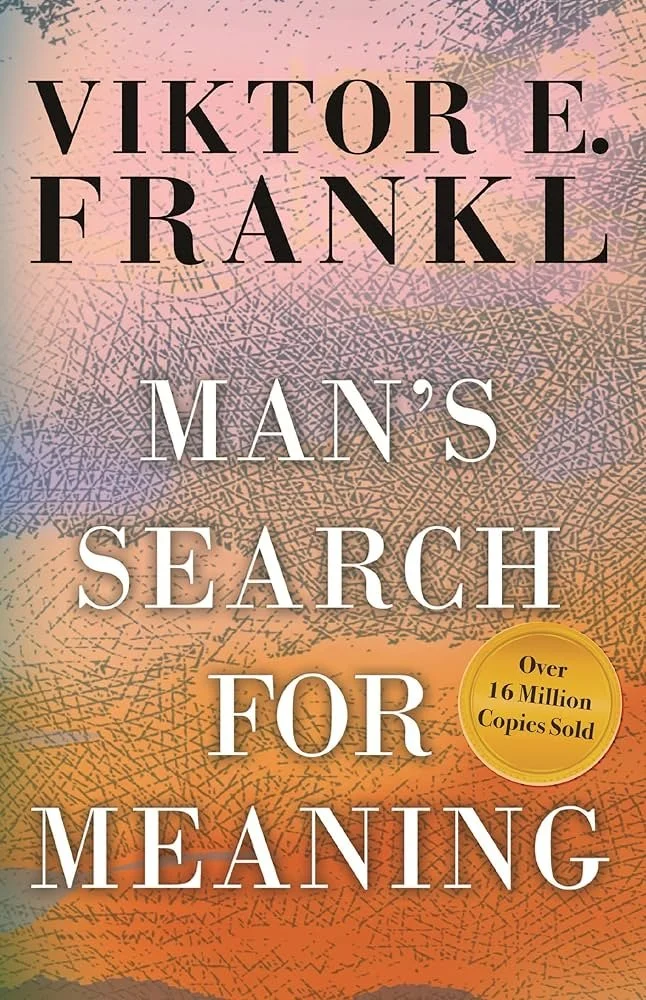
In the horrors of those camps, and based on his own research and writing prior to his arrest by the Nazis, Frankl believed that he had the freedom to choose his response to the conditions around him. He called that belief “the last of human freedoms.”
Frankl’s belief was put to the test in ways he never anticipated.
Amid abuse, suffering, profound loss, and three years in four different concentration camps, Frankl chose a belief and a personal story filled with purpose and meaning. Not only did Frankl survive, but after the war he went on to share his experiences and insights with the world.
(If you’re interested in Frankl’s story, read his book Man’s Search for Meaning. Its transformational lessons have had a deep impact on many, including close friends of mine.)
I know, Frankl’s story is remarkable. And it would be easy to dismiss it as if Frankl were some kind of unicorn.
That would be a mistake.
Granted, Frankl put his belief into practice under extreme circumstances. But that’s the point.
If it was possible for Frankl to choose what he believed and how to put that belief into practice in such unthinkably difficult circumstances, you and I can do it, too.
One of my early belief breakthroughs came when I was introduced to an emerging body of research called “post-traumatic growth.”
Post-traumatic growth (PTG) is the idea that people can TRANSFORM and GROW as a result of trauma, tragedy, and adversity. They can be different and even better than they were before.
PTG doesn’t mean survivors don’t struggle. It means that struggle can result in positive change.
The research of psychologists Richard G. Tedeschi and Lawrence G. Calhoun revealed that people who experienced growth following some “seismic event” often did so in one or more of these five areas:
Increased inner strength
Openness to new possibilities
Closer and deeper relationships
Greater appreciation for life
Stronger sense of spirituality
Over time, the idea of post-traumatic growth had a profound impact on what I believed about my recovery.
Through the lens of post-traumatic growth, I began to believe my struggle was an opportunity—the opportunity to grow!
“In the aftermath of an earthquake, why not build something better? Don’t just live beneath the rubble, don’t just build the same crappy building that you had before.” ~ Richard G. Tedeschi, PhD
In the aftermath of my earthquake, the idea of post-traumatic growth was a complete reframing of the journey to come. My struggle became about more than getting out of a hole. I started to believe my struggle was about building a better building—increased strength, new possibilities, closer relationships, deeper gratitude, and stronger spirituality. As a result, my struggle took on new meaning, purpose, and hope.
Let’s close with three big questions for the week to come.
1 - What’s the seismic event or earthquake in your life that’s holding you hostage and impacting your attitude, health, and well-being?
2 - What would happen if you believed your struggle was an opportunity—the opportunity to grow?
3 - How would your growth impact not only you, but the people you love and care about, the causes you care about, or the difference you want to make?
Please hug the cactus and give that idea some genuine thought and prayer this week.
I believe in you. I’m grateful for you. And I’m cheering for you every step of the way.
Until next time, please remember that it’s never too late to make a difference.
John Alan
